Key Takeaways
- If military sexual trauma caused or worsened PTSD, depression, anxiety, or another mental or physical health condition, you may qualify for VA disability compensation.
- The VA recognizes sexual assault and sexual harassment experienced during military service as MST, regardless of the veteran’s gender or the perpetrator’s gender, rank, military status, or relationship to the veteran.
- A lack of official documentation doesn’t necessarily defeat an MST-related claim. The VA must consider other forms of corroborating evidence in personal-assault PTSD claims.
- Transfer requests, declining work performance, substance abuse, mental health symptoms, lay statements, civilian treatment records, and personal statements may help corroborate the reported trauma.
- An examiner may evaluate your symptoms, medical history, functional impairment, and the relationship between your condition and service in personal-assault PTSD claims.
- Depending on the reason for the denial, you may pursue a Supplemental Claim, Higher-Level Review, or Board Appeal and challenge errors in how VA evaluated the evidence or applied the law.
The Department of Veterans Affairs uses the term military sexual trauma, or MST, for sexual assault or harassment experienced during military service. MST, which can affect men and women, may occur on or off duty, on or off base, and at the hands of military personnel or civilians. It can also cause mental and physical health challenges that continue long after your service ends.
If you developed PTSD, depression, anxiety, or another condition related to MST, you may qualify for VA disability compensation. In this guide, we’ll explain how the VA defines military sexual trauma, what to expect from a C&P exam, and what options you have if the VA denies your claim.
What Is Military Sexual Trauma?
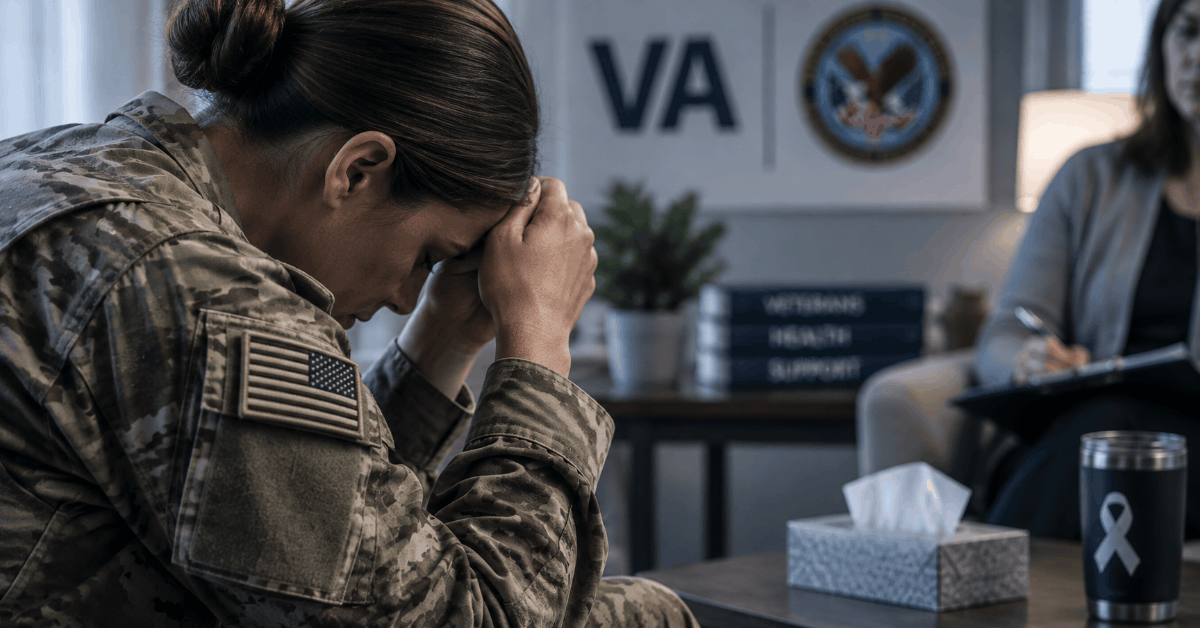
Military sexual trauma (MST) can include sexual activity you were involved in against your will, sexual contact when you couldn’t consent, and unwanted sexual advances that you found threatening. As we indicated above, MST can affect both men and women and may happen anywhere. The VA can also recognize an experience as MST regardless of the perpetrator’s gender, military status, rank, or relationship to you.
Examples of experiences the VA may classify as MST include:
- Being pressured or coerced into sexual activity
- Being threatened with negative consequences for refusing sexual activity
- Being promised favorable treatment in exchange for sexual activity
- Sexual contact while you were asleep, intoxicated, or otherwise unable to consent
- Being physically forced into sexual activity
- Unwanted sexual touching or grabbing, including during hazing
- Threatening comments about your body or sexual activity
- Unwanted sexual advances that you found threatening
What VA Disability Benefits Are Available for Conditions Related to MST?
If the VA grants service connection, it assigns a disability rating based on the severity of the condition. Disability compensation is generally paid monthly and tax-free, with ratings assigned in 10% increments from 10% to 100%.
Although MST itself isn’t rated as a disability, conditions arising from the trauma may be. Common -related mental health conditions include:
- Post-Traumatic Stress Disorder (PTSD)
- Depression
- Anxiety disorders
- Physical health conditions
It’s also important to distinguish disability compensation from MST-related health care. The VA provides free treatment for mental and physical health conditions related to MST without requiring a VA disability rating or documentation showing that the trauma occurred.
Note: For new mental health claims related to an in-service traumatic event, the VA uses Form 21-0781, Statement in Support of Claimed Mental Health Disorder(s) Due to an In-Service Traumatic Event(s). If you file an online disability application and answer the VA’s mental health questions there, you don’t need to submit a separate Form 21-0781.
Can You Receive VA Disability Benefits If You Never Reported the MST?
Yes. You can pursue VA disability compensation for a condition related to MST even if you never reported the sexual assault or harassment while you were serving. The VA recognizes that many people don’t report these experiences when they happen, so the absence of an official report doesn’t necessarily defeat a claim.
This is especially important in PTSD claims based on personal assault. Under 38 C.F.R. § 3.304(f)(5), evidence from sources outside your service records may corroborate your account. Before denying a PTSD claim based on personal assault, the VA must tell you that alternative evidence and proof of behavioral changes may support the claim, giving you an opportunity to submit that evidence or identify where the VA can obtain it.
Federal law also limits how the VA can treat the absence of an in-service report. In AZ v. Shinseki, the U.S. Court of Appeals for the Federal Circuit held that when a veteran says a sexual assault wasn’t reported, the absence of service records documenting the assault doesn’t mean that it didn’t happen. The VA also can’t use the veteran’s failure to report the assault as evidence against them.
What Evidentiary Standard Applies to MST-Related PTSD Claims?
Veterans Affairs applies special evidentiary rules when a PTSD claim is based on an in-service personal assault. Acknowledging that sexual assault and harassment may never appear in official military records, the VA can consider behavioral changes that happened afterward, such as requesting a transfer or declining work performance.
The VA can also send the evidence in your file to a qualified medical or mental health professional for an opinion. In Menegassi v. Shinseki, the Federal Circuit confirmed that medical opinion evidence may be used when determining whether a personal-assault stressor has been corroborated.
These rules don’t eliminate the service connection requirements for PTSD. The VA still looks for the following:
- Medical evidence diagnosing PTSD;
- Medical evidence linking current symptoms to an in-service stressor; and
- Credible supporting evidence that the stressor happened.
What Evidence Can Support an MST-Related PTSD Claim?
The VA accepts direct and indirect evidence from several sources when evaluating PTSD claims based on personal assault.
Behavioral Changes in Your Service Records
Your military records may contain changes that support your account even if they never mention sexual assault. Examples of relevant behavioral changes include:
- A request for transfer to another military assignment
- Deterioration in work performance
- Substance abuse
- Episodes of depression, panic attacks, or anxiety without an identified cause
- Unexplained economic or social behavior changes
The VA also identifies changes in eating or weight, relationship problems, and sexual functioning as possible indirect evidence. Records from medical facilities, counseling centers, hospitals, physicians, rape crisis centers, domestic violence programs, and similar sources may also provide corroboration.
Statements From Fellow Service Members and Other People
Statements from people who knew you can help corroborate an MST-related PTSD claim. These statements may come from fellow service members, roommates, family members, friends, clergy members, or others who learned about the incident or observed changes afterward.
The person doesn’t need to have witnessed the assault. A fellow service member, for example, may describe a sudden request for reassignment, declining performance, withdrawal from others, or changes in behavior after the reported event. The VA considers lay statements with the other evidence in the record.
Civilian Medical, Counseling, and Other Records
Records created outside the military can also help corroborate an MST-related PTSD claim. The VA identifies records from civilian doctors, hospitals, mental health counselors, rape crisis centers, domestic violence programs, and law enforcement authorities as examples of evidence that may support the reported stressor.
Medical records created after service may also document symptoms, treatment, or statements about what happened. Depending on the record, this evidence may help establish the history of your condition or support other evidence concerning the reported trauma.
Your Personal Statement
Your own statement is part of the evidence the VA reviews. You can describe the traumatic event, when and where it occurred, what changed afterward, the symptoms you developed, and how those symptoms have affected you. Your statement can also help the VA identify records, witnesses, behavioral changes, and other evidence that may corroborate the reported stressor.
What Happens During a C&P Exam for an MST Claim?
The VA may schedule a Compensation and Pension exam, commonly called a C&P exam, when it needs medical evidence to decide your claim. The examiner may review your records, ask about your symptoms and medical history, and provide medical findings or opinions the VA needs to decide the claim. In an MST-related claim, the exam may also address the reported traumatic event and the evidence connecting your current condition to military service.
For a mental health claim, the examiner may ask about:
- Your current symptoms
- When those symptoms began
- Your treatment history
- Changes in work, relationships, sleep, mood, or daily functioning
- The in-service traumatic event
- Behavioral changes that followed the event
- Other records or statements related to the claim
An MST-related C&P exam isn’t a separate process with a different rating system. The VA still evaluates mental health conditions under the same rating criteria that apply to other psychiatric disabilities. The difference is that, in a PTSD claim based on personal assault, the examiner may be asked to review behavioral changes and other evidence and give an opinion about whether the record indicates that a personal assault occurred.
Note: You can request a male or female provider for a claim involving a mental or physical condition resulting from MST. VHA examinations may even be rescheduled or moved if needed to honor your preference.
During the exam, you should answer all questions as accurately as you can. You don’t need to volunteer graphic information that isn’t relevant to the medical information being sought. The examiner’s role is to address the medical issues, including diagnosis, symptoms, functional impairment, and any requested opinion about the relationship between your condition and military service.
What Happens If VA Denies an MST-Related Disability Claim?
If you’re denied, the VA provides three main review options: a Supplemental Claim, Higher-Level Review, or Board Appeal. For most VA benefits, you generally have one year from the date on the decision letter to request a Higher-Level Review or Board Appeal. You can file a Supplemental Claim later, but filing within one year can help preserve the effective date for the earlier claim.
- Supplemental Claim: This option lets you submit or identify new and relevant evidence. In an MST-related claim, that could include treatment records, statements from fellow service members or family members, or a medical opinion addressing a gap the VA identified in the denial.
- Higher-Level Review: A senior reviewer examines the existing record for an error or a difference of opinion. You can’t submit new evidence with this option. A Higher-Level Review may also identify a duty-to-assist error, such as VA failing to obtain records or medical evidence it should have sought before deciding the claim.
- Board Appeal: You can ask a Veterans Law Judge at the Board of Veterans’ Appeals to review the decision. Depending on the Board review option you select, you may be able to submit additional evidence or request a hearing.
Read the decision letter closely before selecting a review option. If VA had the evidence it needed but applied the law incorrectly or failed to address favorable evidence, a Higher-Level Review may handle that error. If the record needs further evidence, a Supplemental Claim allows you to provide it. A Board Appeal, which places the dispute before a Veterans Law Judge, provides several review options that a veterans benefits attorney can explain to you.
Talk to a Veterans Benefits Attorney Today
If you’re seeking VA disability benefits for PTSD, depression, anxiety, or another condition related to military sexual trauma, contact Perkins Studdard LLC. We can review your claim, examine the evidence, and help you receive benefits related to the trauma. If you’re denied by the VA, we can help identify problems in the decision and explain the review options available to you. To schedule a confidential consultation and case evaluation, call our law firm at (770) 285-0548.